
Immersive leadership team building in a castle: the Esteve case
An alchemist, four rooms and the Elixir of Life: how a story-driven team building for leadership teams is produced.
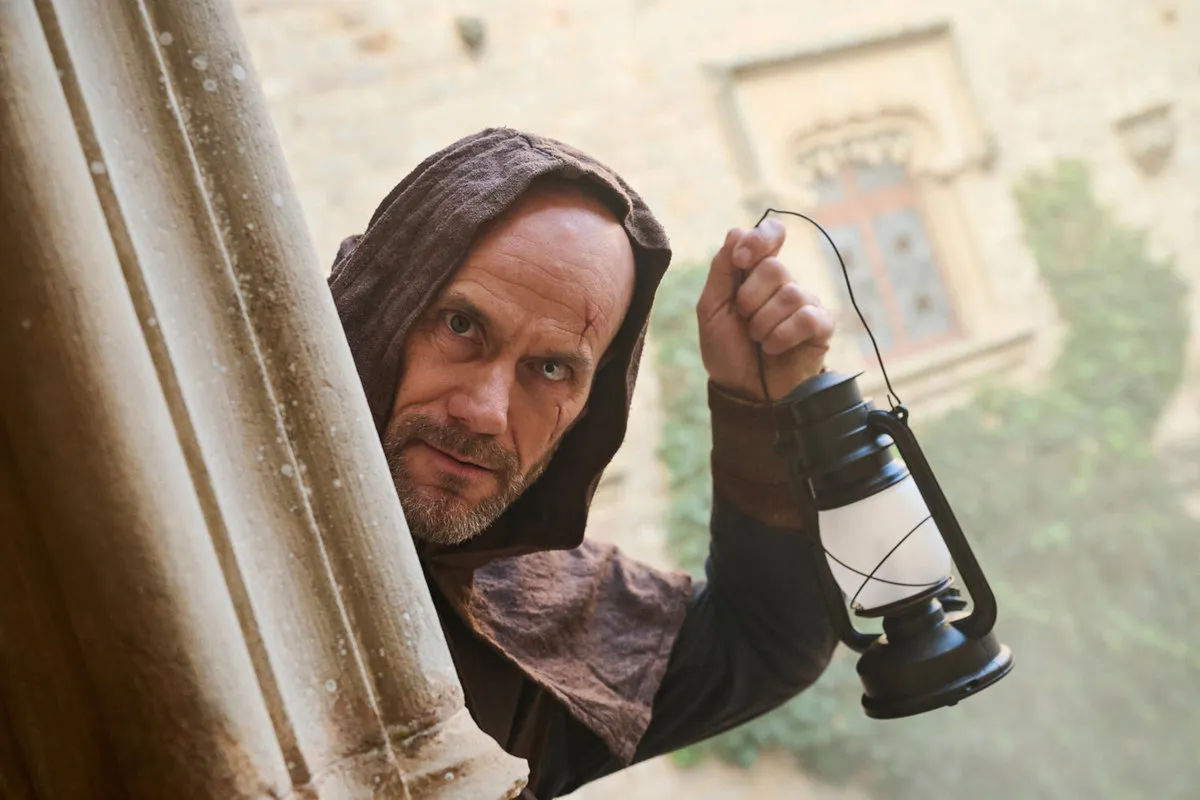
 The Alchemist · 13th century castle
A real event used as a production example. Here is how you would run an event like this with Murphy OS today.
The Alchemist, the team building created for Esteve, turned a 13th-century medieval castle into a fully narrative set for leadership teams and managers. Split into strategic groups, participants had to decipher a manuscript and solve puzzles across four rooms of the castle (cellar, laboratory, king’s chamber and reliquary) to find the Elixir of Life, guided, or doomed, by Dr Estevilus. Producing that is theatre, logistics and group dynamics at once. Here are the moving parts and how you would build it today with Murphy OS.
What the event called for
The public write-up describes an experience designed to spark leadership, connection and real emotion, and is clear about what it is not: The Alchemist is not an escape room.
| Element | What it had |
|---|---|
| Audience | Leadership teams, leaders and managers |
| Venue | 13th-century medieval castle |
| Story | An alchemist determined to bring back the lost heir |
| Mechanic | Puzzles in four rooms: cellar, laboratory, king’s chamber, reliquary |
| Challenges | Physical, intellectual and emotional, in groups |
| Production | Storytelling, actors, technical and artistic set dressing, food, music |
| Close | Time together, shared meals and closing activities |
The opening line («The heir is dead. And with him… hope.») sets the tone: the story leads and production has to carry it without showing.
The production pieces behind an event like this
Story and puzzles
Before logistics comes the script: what happens in each room, which fragment of the formula it hides, what each team decides. Every challenge has to suit a senior audience: demanding, never humiliating.
Four rooms, several teams
Four rooms with several groups rotating is a clock problem. If one team gets stuck in the laboratory, the next one waits at the door and the story goes cold.
Actors and direction
Characters who guide, provoke and react live. Each actor needs their lines, their cues and to know where each team is.
A castle as a set
Each room is dressed as a stage set, with lighting and AV that respect a historic building. Its load-in hours and house rules shape everything.
Time together and the close
Shared meals and the closing session are where the metaphor lands. If they arrive late and rushed, everything before loses its meaning.
How you would run it today with Murphy OS
This is what we would do with a similar brief. Examples are illustrative.
1. Planner: a budget by story block
In Planner you split global costs (castle, script, dressing for each room, actors, music) from per-guest costs (food, each participant’s materials). If the client wants to drop a room, duplicate the version and see the margin impact instantly. In Setup you load the castle’s hours by day, with supplier and owner.
2. Scenes: one scene per room
In Scenes you upload the castle plan, calibrate it and build one scene per room: where props go, where the actor stands, how teams come in and out. Each scene exports its equipment spreadsheet for set dressing and AV. Another scene for the shared meal, with seating and special meals for catering.
3. Forms: discreet registration for a senior audience
With the team building template in Forms you build an invitation in the story’s look (without giving away the plot). Useful questions:
- Details, role and department, to balance the groups.
- Dietary needs and allergies.
- Mobility or physical limits, to adapt the physical challenges.
- Transfer, if there is one.
- Privacy and image consent.
The client follows responses on their link and you lock the groups with the data in hand.
4. Contracts: venue, actors and suppliers
In Contracts you start from the venue hire template with house rules as an annex, the performer template for actors or a company (with tech rider and image rights) and the supplier template for catering and AV. Switch on cancellation by either party and force majeure. They are guidance templates: have your adviser review them.
5. Run of show (Escaleta): rotations with buffers, actors in place
In the run of show you chain the day: arrival, story opening, rotation through the four rooms, lunch, closing session. One line per team and room, tagged by crew: actors, AV, catering, stage management. Pin lunch. The crew ticks from their phones when each group leaves each room and you see if you are ahead or behind. Actor notes are marked internal: the client sees the programme on their link without spoilers.
Lessons worth keeping
- Script comes before logistics, but logistics decides whether the script survives.
- Several rooms with rotation is a clock problem. Buffers and someone measuring.
- A senior audience wants demanding, respectful challenges. Ask about mobility in advance.
- Actor notes stay away from the client. Separate internal from what they see.
- The close matters most. Protect it in the run of show.
What I would check tomorrow with this brief
- Does every room have its scene, equipment and lead?
- Does the rotation fit the time with buffers?
- Do the actors know which cue they enter on?
- Do I have roles and departments to balance groups?
- Is the closing session pinned to a fixed time?
Frequently asked questions
What is The Alchemist, Esteve's team building?
An immersive team building for leadership teams in a 13th-century castle: an alchemy story where teams solve puzzles across four rooms to find the Elixir of Life, with actors, food and closing activities.
How is it different from an escape room?
In its purpose. It uses story and challenges as a metaphor for leadership, communication and adapting to change, and it ends with time together and a closing session.
How do you rotate teams through several rooms?
With a run of show where each room has a slot per team and a lead, plus buffers between rotations. If a team gets stuck, you see it live and fix it before it blocks the next one.
Which contracts does a team building with actors need?
The venue, one per actor or company with rider and image rights, and supplier contracts for catering or AV. Always have them reviewed by your adviser.